Showing posts with label Social Dimension of System & Synthetic Biology. Show all posts

Friday, 29 April 2016

,

SDSSB Comments 9 - Design and Aesthetics


“...art is about asking questions, questions that may not be answerable” (Maeda, 2012)

Synthetic Biology has been able to bring different species together: artists, designers, scientists, and engineers. I think, an important discussion by Agapakis (2013) and Ginsberg (2014) is the differences in “design mindset” of these species in their respective fields. Both argues that designing synthetic biology within the paradigm of industrialization will limit its future into the so called “myopic & monolithic” consumptive industrial biotechnology. Agapakis (2013) explains that, while synthetic biology brings analytic science to technology and innovation, design will bring technology to society. Opening dialogue between these species would provoke more questions and discussion to where the future of synthetic biology will head on. Explorative imagination of art and design (bioartist) would open new ideas and possible futures for synthetic biology (Yetisen, 2015).

Another keypoints from the papers is the idea that synthetic biology will have different, or maybe its own definition of design. While engineers always long for standardization and predictability, we cannot ignore the fact that designing a complex living system will not be fully predictable. Acknowledging the unpredictability of designing living system will bring another perspective on design, the “speculative design”, that will likely to be working in the social and environmental context of the real world:

“we should approach the design of biological systems with more humility and with design principles that are more biological, emphasizing not control but adaptability, not streamlining but robustness, and not abstraction but complexity” Agapakis (2013)

An interesting part is on p.xviii of Ginsberg (2014):

“Some people assumed that our aim is outreach: a public relations activity on behalf synthetic biology to beautify, package, sanitize, and better communicate the science.”

It is a proof that some people involved in synthetic biology (especially with certain political/industrial standing) still view the translation of science and technology is one way, like the central dogma mentioned in Agapakis (2013). Art and design truly can bring dialogues and more future possibilities to synthetic biology. But, when synthetic biology is heavily commercialised, will this bioart, the “expressions of discord and controversy” (Yetisen, 2015), be heard by those with policy making power?

Additional references

Maeda, J. 2012. How art, technology and design inform creative leaders. TED Talk. Available:    https://www.ted.com/talks/john_maeda_how_art_technology_and_design_inform_creative_leaders

Continue reading SDSSB Comments 9 - Design and Aesthetics
,

SDSSB Comments 8 - Past and Futures


Brown et al. (2006) gave us a good example of how scientific expectations, both hype and dissapointment, have shaped the history of scientific development in the case of Hematopoietic Stem Cell (HSC), which was stated as one of the most valuable stem cell in bioeconomy. I think, in 2006, Brown et al. addreses the change of interest from HSC towards human Embryonic Stem Cell (hESC) which promises a lot of things. From the history of HSC, we can understand that a there were a lot of expectation when a new information/technology was founded (even though it is still poorly understood), but dissapointment came when the expectation was not met, Of course, there were a lot of political and economical background in the announcement of new technologies. The same goes with Nordman & Rip (2009) on the ethical aspect of nanotechnology, where more pressing development receive less attention with the more “hype-ning” futuristic issues. Thus, the history (both hype and dissapointment) might shape future decision or trends of the emerging field.

Danielli’s prediction of the future biology is quite fascinating, and accurate. Interestingly, this perspective on the future seems to be responded differently in comparison when the human genome project was announced. A perspective which at the time seems futuristic has been responded with so much hype when the human genome was announced. But, what was achieved in 2000 was a beginning of the genomic era, yet overly hyped by the press release authors. It is good to bear in mind that the claims and hopes stated in the press release might take longer to became reality.

It is not easy to make balanced expectation to certain technological advances due to personal bias. But as Nordman & Rip (2009) proposes, a more interdisciplinary discussion and “reality check” might help us to get balanced expectation. Predicting the future is of course an important issue for both policymakers and business, but will “promissory capitalization” or “biovalue” shaped our scientific discovery trends in the future? Would it limit our creativity to explore? So how should we think and chose to innovate in the future? In this case, I would like to quote Joi Ito’s (2012) idea on compass over maps:

“The idea is that in a world of massive complexity, speed, and diversity, the cost of mapping and planning details often exceeds the cost of just doing something–and the maps are often wrong”

 References

Ito, J. 2012. Compasses Over Maps. MIT Media Lab Blog. Available from: http://blog.media.mit.edu/2012/07/compasses-over-maps.html
Continue reading SDSSB Comments 8 - Past and Futures
,

SDSSB Comments 7 - Synthetic Biology and the Public Good


Calvert and Emma (2013) starts the discussion with an interesting argument: “science is part of society and society is part of science”. Even so, the paradigm lies to distinct between the scientist, engineers, and policy makers, with the public. Indeed, both scientist, engineers, policy makers, and industry regards “the public” as an important entity to dealt with. Joly and Rip (2007) reported how public opinions have important influence in the development of science and policy by using the case of genetically modified vines by INRA. Another report (Hayden, 2014) shows that synthetic biology business firms really depends on the “public acceptance” of their product. In this particular case, the public was boldly positioned as “the consumer”. Thus, there is a perspective that the development of a disruptive technology, like Synthetic Biology, desperately trying to get “public acceptance”.

Calvert and Emma (2013) and also Wickson et. al. (2010) argues for a perspective change in the position of public within the development of a new and disruptive technology. Calvert and Emma (2013) suggest that changing the frame from “public acceptance” to “public good”. This is achieved by recognizing the public as a heterogeneous groups of citizen engage them in the development of the technology. Synthetic Biology as public goods should be developed through ongoing concern and dialogue with public interest.

But of course, in order to achieve this two way dialogue, as implied in Wickson et al. (2010), we need citizens which actively engage to democratise science and technology development. It is therefore a reminder for us how scientific literacy is needed to realize the ideal public engagement in the development of Synthetic Biology. In reality, there are a lots of part in the world that this still cannot achieved (where citizen can actively engaged in scientific development and policies) due to a lot of circumstances. It is therefore, I think is important for the academia, which was entrusted by the public as the “agent of change”, to be modest and responsible for their act and innovation to contribute as public goods.
Continue reading SDSSB Comments 7 - Synthetic Biology and the Public Good
,

SDSSB Comments 6 - Governance and Regulation


The 1975 Asilomar conference was presented in the unique press narration, entertaining and satire, in the popular Rolling Stones magazine. The conference aims to come up with an agreed regulation on the new disruptive technology. The emerging recombinant DNA technology was predicted, and has been proofed, to have great impact on today’s biotechnology, with risks that is also considerable. Michael Rogers, a press, told the story of the congress somewhat like a group of nerds discussing about the end of the world in an isolated conference. What shocked me though, was the response in page 39: “But what about the press?” (Rogers, 1975). Its as if the scientist and the public was from a diferent species.

Hurlbut et al., (2015) reflects on the 1975 Asilomar Conference to critics the upcoming NAS-NAM plan to CRISPR, the disruptive gene-editing technology, for its ethical, legal, and social implication. Hurlbut argues that the Asilomar conference is an example where an important regulation on a disruptive technology does not involves the opinion of public. Thus, the governance of gene editing technology, and the NAS-NAM plan, should be more democratic. In order to achieve that, the discussion should take note four themes: Envisioning futures, distribution, trust, and provisionality (page 3).

I agree that science policy should involve the wider public, because we all have rights and would be affected by the impact of the technology. Scientist could be depicted as arrogant, paranoid, and enclosed in his “research world”. But I think the science culture from Asilomar 1975 and today’s academia has changed. The interdisciplinarity of today’s academic have brought critical minds to address new technologies and challenges. Good education has given scientific literacy to the public, which is a keypoint for public contribution in the policy making. To  govern a technology with considerable uncertainty in both applications and implications, a thorough discussion between politician, scientist, and public should be well designed. Decision should be made through thorough analysis by world leaders, with the expertise of scientist and taken account the public opinion.
Continue reading SDSSB Comments 6 - Governance and Regulation
,

SDSSB Comments 5 - Bioethics


Knowledge is value-neutral. The value depends on its user. Or is it? Douglas & Savulescu (2010) addresses three issues regarding concerns in Synthetic Biology: (1) it is playing god (?), (2) the distinction between living things and machines, and (3) knowledge misuse, which could leads to bioterrorism or warfare. On playing God, I think as long as it is within the reach of human knowledge, then it is not in the domain of God. It is true that the “openness” of Synthetic Biology could lead to many safety risks, but comparing them to the nuclear warfare is too much. Became paranoid or embrace the possibilities? Proceed with caution, develop risk reduction strategies, but don’t let fear limit our creativity.

What I found more interesting is:

“...that we will misjudge the moral status of the new entities that synthetic biologist may produce” (Douglas & Savulescu (2010, p. 689)

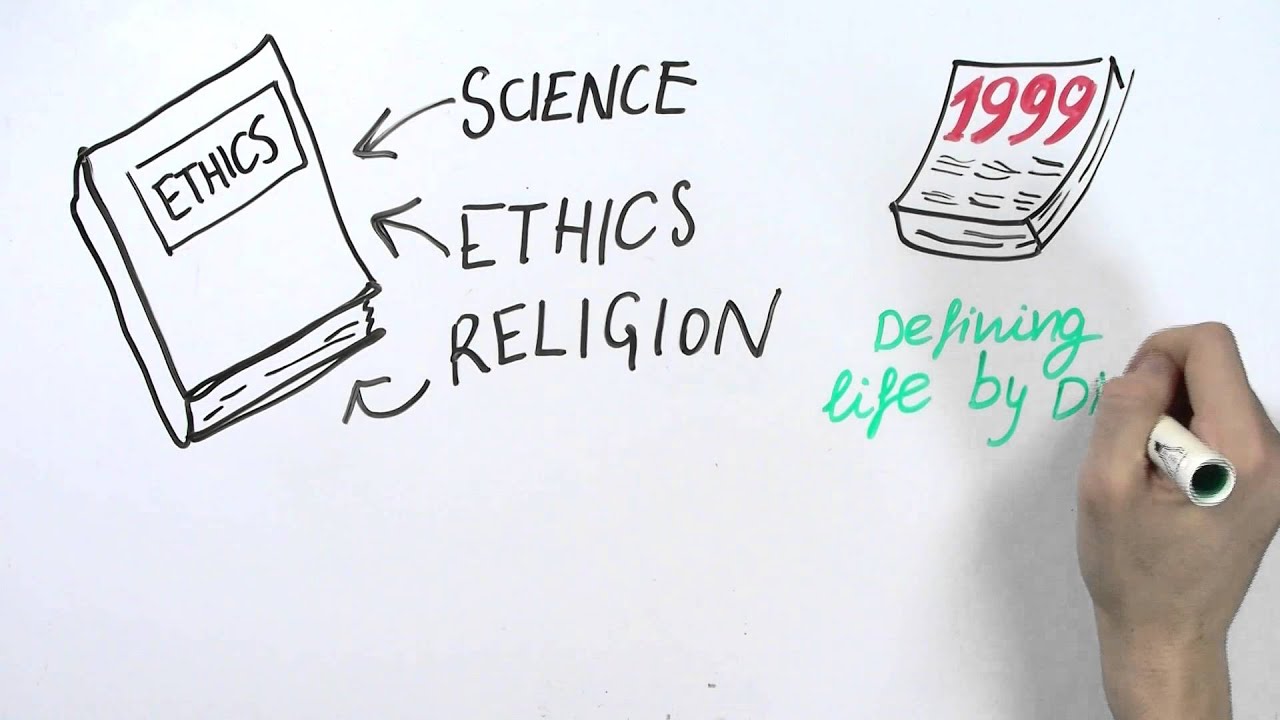
Human has always tried to define and categorize what is living being and what is not, what is their rights and moral status. What is a person and what is the value of life? Harris (1999) choses that a “creature capable of valuing its own existence” as a person, and thus explain its right to exist. And what interesting is, that individual have different moral significance: from potential, pre-person, to actual person. So, how do we know other being than human value their existence? Is it right to give gradual moral significance? What about animals and the creations of synthetic biology?

Regan (1985) argues that theories for animal rights (indirect duties, utilitarism, contractiarism) should be applicable to human rights too. If not, then its wrong. Regan views that all subject of life have inherent value, which is the value as individual to deny discrimination and weighting benefit cannot be used to violate the rights.

So, as synthetic biologists, how are we going to address the moral status of our “creation”? To be honest, I don’t know where to stand. Can logic judges what is right and what is wrong? Is it the time to hear what our heart speaks? Should we question our humanity?

Continue reading SDSSB Comments 5 - Bioethics
,

SDSSB Comments 4 - Synthetic Biology as Open Science?


I envy Drew Endy’s vision on Synthetic Biology. I personally think that IGEM and the Biobricks Foundation starts because of Endy’s personal will to open biology and make it easier to engineer, because he himself was not a “life sciences-trained” academia. Nevertheless, in Endy’s plenary talk (2008), there are two solutions to make this dream happens: (1) involves more people, and (2) development of better tools. And I think it did well. The growing SynBio community has driven innovation to accessible tools and open repositories such as wetware.org. The need for ‘standard exchange format’ has been solved as the SBOL through collaborative attempt from the community members (Galdzicki et al., 2014).

The promise of Synthetic Biology was one of the driving power of DIY-Bio movement in the past decade. But, it’s not just the affordable tools or the “easyness” of Synthetic Biology that drives the DIY-Bio movement. The concept of boundary (Meyer, 2013, p129): between amateurs and professional, big-bio and small-bio, is an important drive for the rise of open biology movement. These DIYBio were the expression of breaking this boundaries.

Current DIYBio communities were mostly born from the previous established hackerspaces or makerspaces, which are mostly have background outside biology. As Jorgensen (2012) said, “...the press had a tendency to overestimate our capabilities and underestimate our ethics”, due to limited access to technology and different regulations around the world, I wonder how many DIYBio group actually did Synthetic Biology?

DIYBio community was shaped by its members, each with different background and visions but shared through Do-It-With-Others (DIWO) principles. What I found interesting from Meyer (2013), is that the European DIYBio states that they found themselves different from the US community. So, how does the geography affects the cultural differences between each DIYBio movement? Were there really a different view between the US, EU, and Asia communities? Will it affect the practice of sharing and openness, or even safety and security approach, in each DIYBio communities
Continue reading SDSSB Comments 4 - Synthetic Biology as Open Science?
,

SDSSB Comments 3 - Ways of Owning


In the last decade, systems and synthetic biology has advanced biology with novel ideas and applications which interests the public, the enterprises, and the academia. As a “hot” topic, Nelson (2014) reported the current issues we have today, the two cultures which debates wether this domain should be “publicly owned” or “privately owned”. But, the question to be asked are (1) what can be patented? and (2) how it will affect the society and innovation.

Calvert (2008) gives an insight on the commodification (the transformation of goods into object of trade) of biological entities. As also stated in Pottage, a commodity should be well defined before disclosured as patent. The problem with the biology, and life itself, that it is dynamic and complex. The reductionism of biology into its molecular parts doesn’t answer emergence properties of living systems, which is the goods that we seek to be commodified. But, Systems Biology which address the holistic interaction of biological systems doesn’t seem to suit the patenting system. Synthetic Biology in the other hand, thorugh its modularity and “predictability” are more suitable for patents.

Pottage (2009) gives insight on how intelectual property became important issue for lots of segment by using Venter’s patent on protocell. As a minimal genome chassis, protocell would a potential core technology to be used as a platform in synthetic biology. Interestingly as it says in p173, the patent may be aimed to gain control to all minimal genome technology. What I understand from the paper, patent enables inventor to disclose (making known to public) and protects their invention in the market (p167). But, restrictice licensing in core technology may results in “Tragedy of anti commons” and became a hindrance in innovation and Venter’s patent need to be given more attention for this.

Protecting Intelectual Property is important for scientist and innovators. In this era where science and technology became very valuable for business, I see that research outputs in academia tends to put lots of efforts in patenting. Will this perspective changes our research trends in the future? I personally believe that the collaborative power of the “crowd” and open source licensing are the powerful drive to innnovate Systems & Synthetic Biology in the future.
Continue reading SDSSB Comments 3 - Ways of Owning
,

SDSSB Comments 2 - Systems Biology and Science Policy


As science and technology deemed important in the progression of humanity, scientific findings moved from “individual artist” in their own laboratory into today’s global scientific society with its culture and policies. Science has come to be an important thing: it is a country’s asset, the driver of new business and industries, and a way to make a living for academia. Therefore, a science policy can affect different aspects not just in the scientific society.

As implied in Macilwain (2011), the investigation to understand how living things work has come to a change of approach, evolved from the reductionist view into the more holistic view of Systems Biology. It promises to bring more sophisticated and complete understanding of human biology, enabling advances in predictive, personalized, preventive and participatory medicine (Hood et al., 2009). This has led the funding bodies to “invest” in Systems Biology, creating new centers around the globe.

The sad story of the MIB (Bain et al., 2014) shows how science policy have a big impact in the development of a research field and the people working in it. Indeed, modelling the Yeast cell is a key to understand how a human cell works, and ultimately “how to battle cancer”. Living cells are not the easiest to work with, but promises need to be fulfilled to the funding agencies. It is then, through research grant reports, the policy makers decide which sector need to be pushed forward or not.

Todays science policy maker are government and Industry. They want the output of research which benefits the country or the business. But the nature of science itself is uncertainty. Scientists jump into uncharted waters, trying to get new knowledge for humanity. But this knowledge may not be beneficial in a clear way. Even “failures” give important information for science to progress.

Does our science policy are the best way to make progress in Systems Biology? Working on systems biology to model living systems indeed have uncertainty aspects of the outcome, but if the science policy is to fund research with a “clear beneficial output”, then it may limit the possibility to explore the “uncharted waters” of biology. Does our science culture (where PI and researchers employed compete for science funding) is already established or it needs to be revolutionized?
Continue reading SDSSB Comments 2 - Systems Biology and Science Policy
,

SDSSB Comments 1 - From Breeding Experiments to Synthetic Biology


Rather than just using philosophical context to define and “limit” a field, I find it more interesting to find what drives the scientific society to gave birth to a new field, both political and technological. It is why, to understand more about Systems and Synthetic Biology, we have to take a look back at the history of its root: Molecular Biology.
The two papers: Abir-Am (1997) and Bud (1998) gave a rather different perspective in the history of Molecular Biology, but both agreed that the foundation of recombinant DNA technology in the 60’s will hold an important point to the development of the Biotechnology Age. What interesting though, the two papers (especially Abir-Arn (1997)) gave a view of how the World Wars and the Cold War play an important role to boost the development of life sciences. Abir-Am (1997) proposes the history of molecular biology in three phases, each influenced by the big “wars”, and how transdiciplinary exact-science has transformed biology into the new age of Biotechnology (chemistry, physics, and mathematics/computer science). Meanwhile, I think Bud (1998) is more conservative, referring Biotechnology came from the early fermentation technologies and the development of new genetic  techniques bring out the “New Biotechnology”. Nevertheless, the dynamic change of science and technology demands upgrade in the research facility, which leds to the new proposal for a new laboratory, and will always happen in the future.
At the end, what drives the new age of molecular Biology today was not the wars anymore, but the business and industry. I wonder if there are political reasons why the authors wrote the papers? On the last paragraph of Bud (1998), I wonder if he state that the genetics-based biotechnology were inspired by traditional biotechnology so does not need to have extra control and therefore give more flexibility for companies to develop their industries in the field?
Continue reading SDSSB Comments 1 - From Breeding Experiments to Synthetic Biology